Culture and Learning
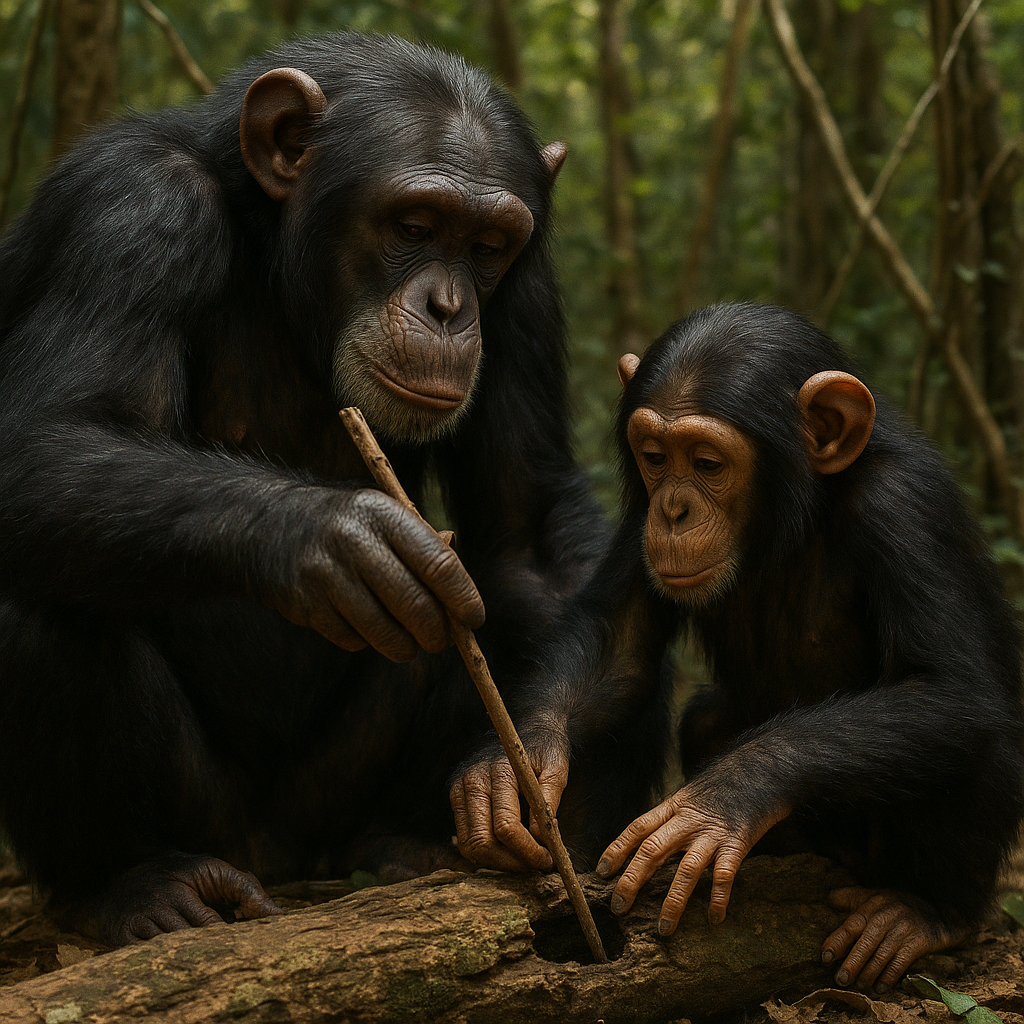
Chimpanzees don’t just learn—they pass traditions across generations.
Cooperation and Joint Action
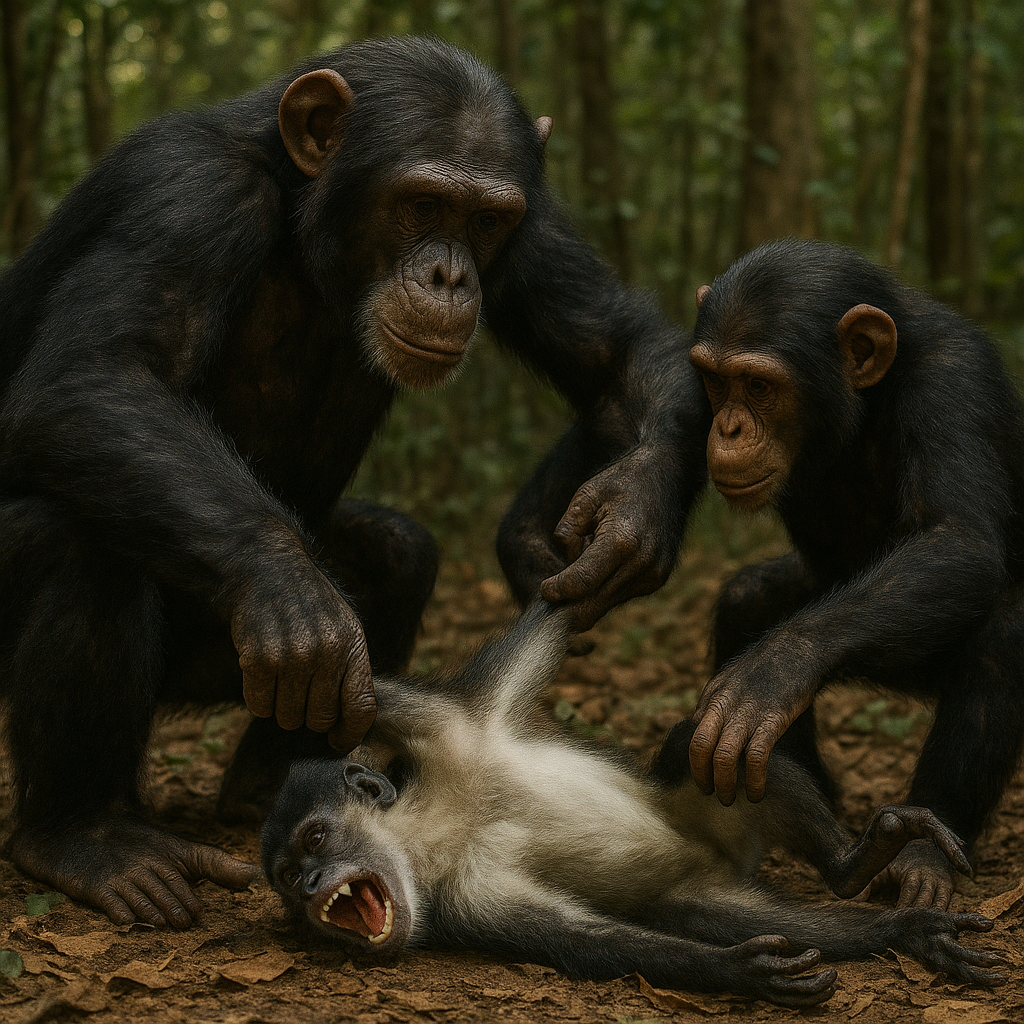
They coordinate, plan, and hunt together—teamwork is not uniquely human.
Social and Goal Inference
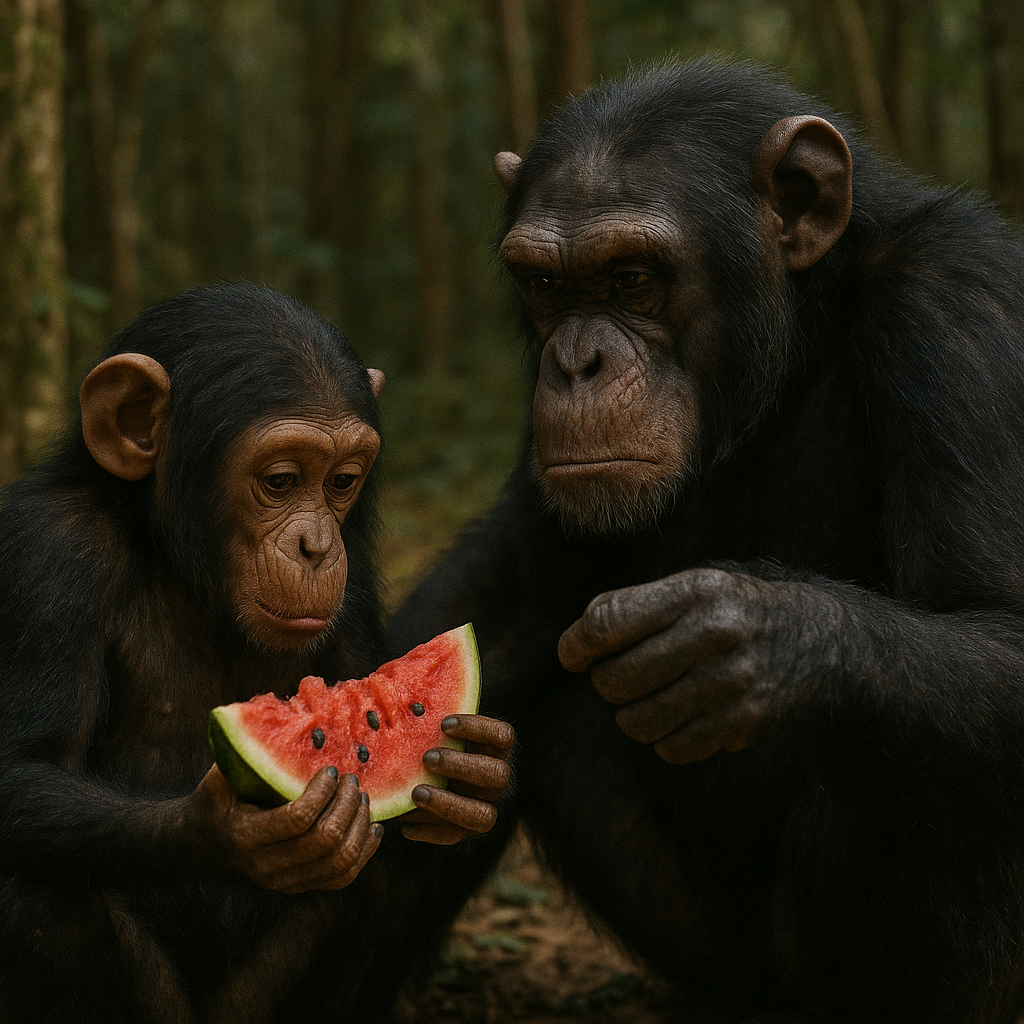
They make social inferences about others, infer goals, and sometimes deceive.
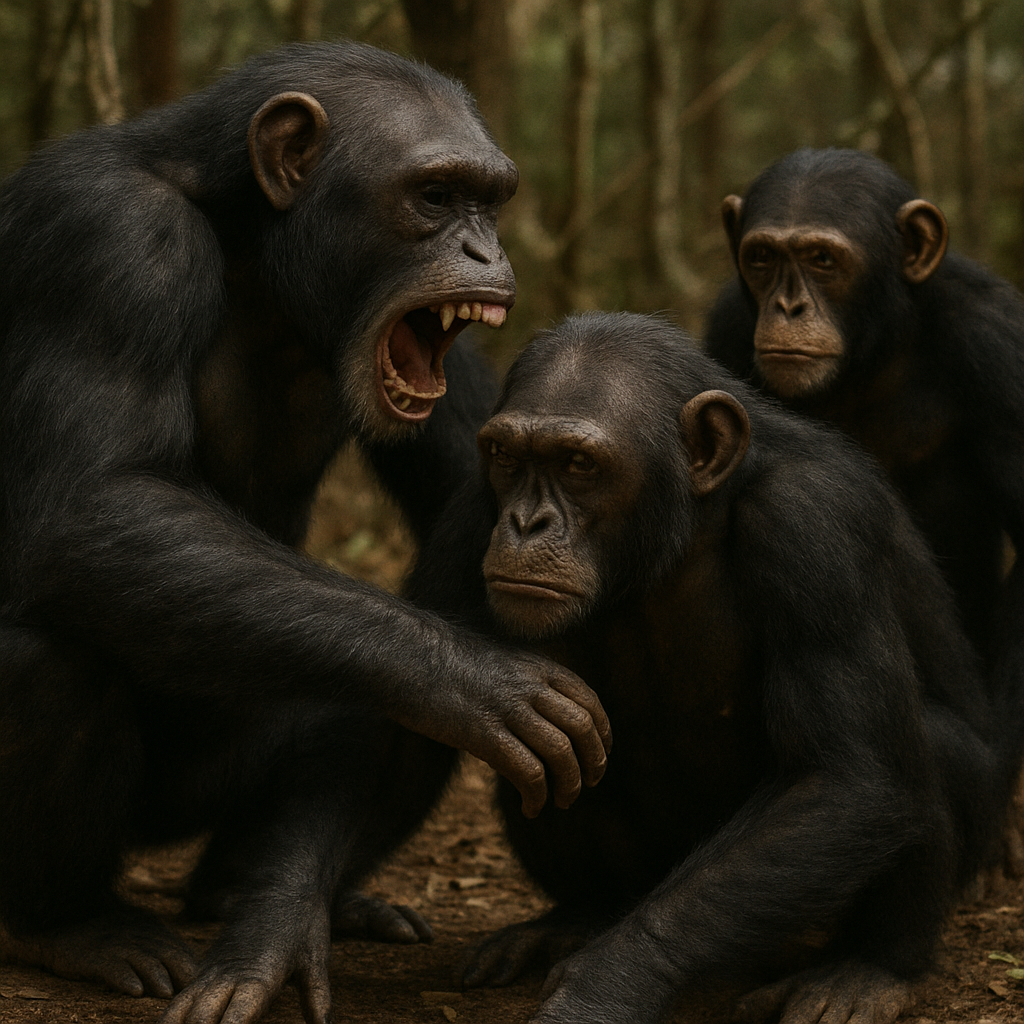
Power and Politics
Dominance, coalitions, and politics echo our own social games.
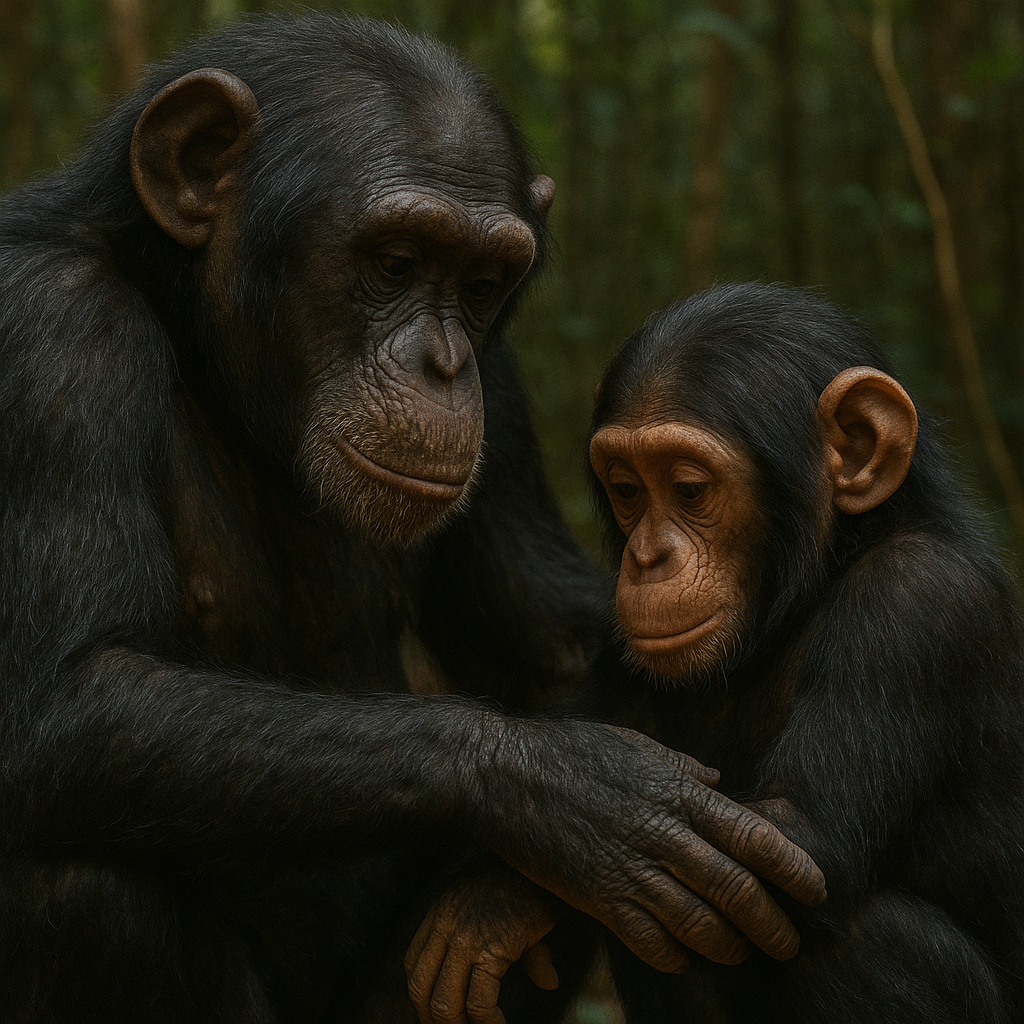
Morality and Fairness
Empathy, altruism, and fairness emerge from shared cognition.
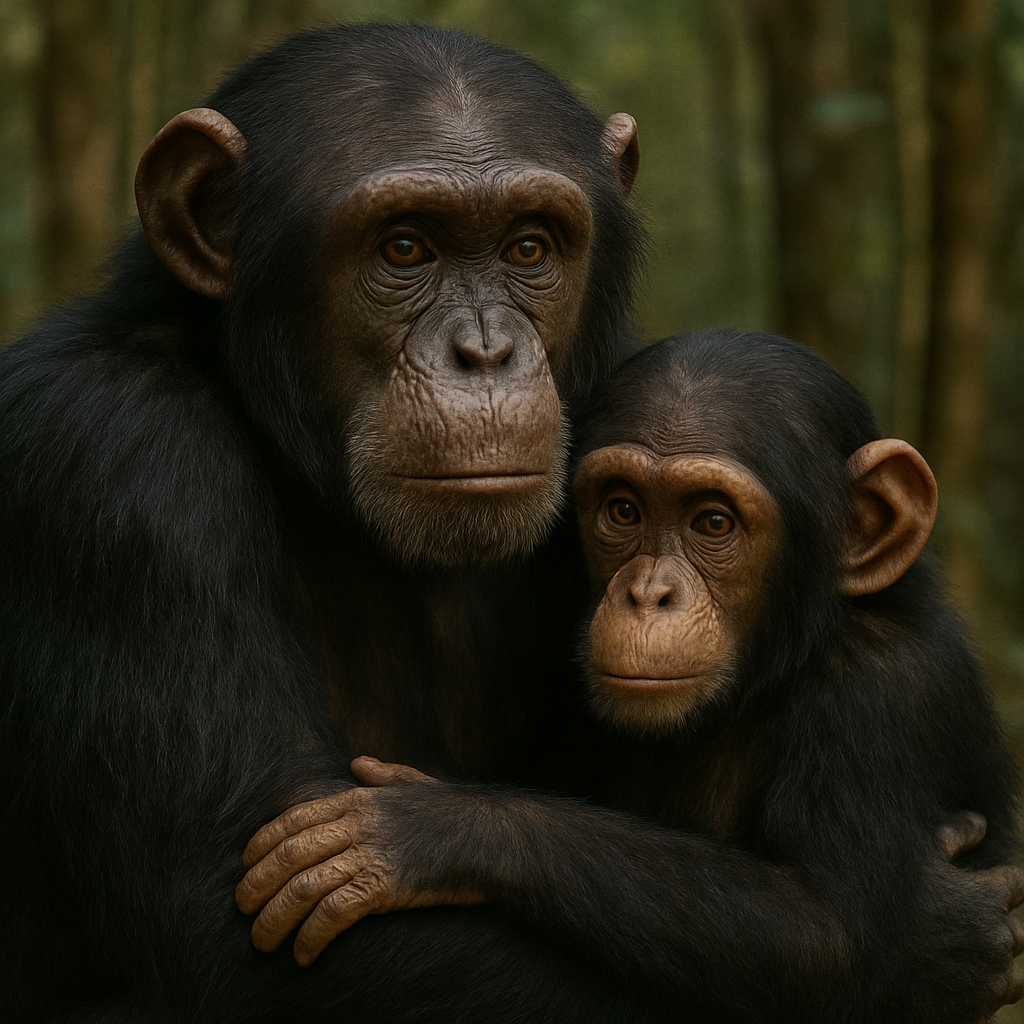
Shared Biological Substrates
Drives, memory, and emotion are not ours alone—they reflect deeper biological roots.
Human research typically examines human phenomena without first clarifying the roots of the capacities that underlie them. As a result, researchers often move directly from partial observations to narrative accounts or loosely defined constructs that lack clear boundaries and stable empirical targets, making them difficult to falsify. This contributes to unstable findings and persistent replication failures.
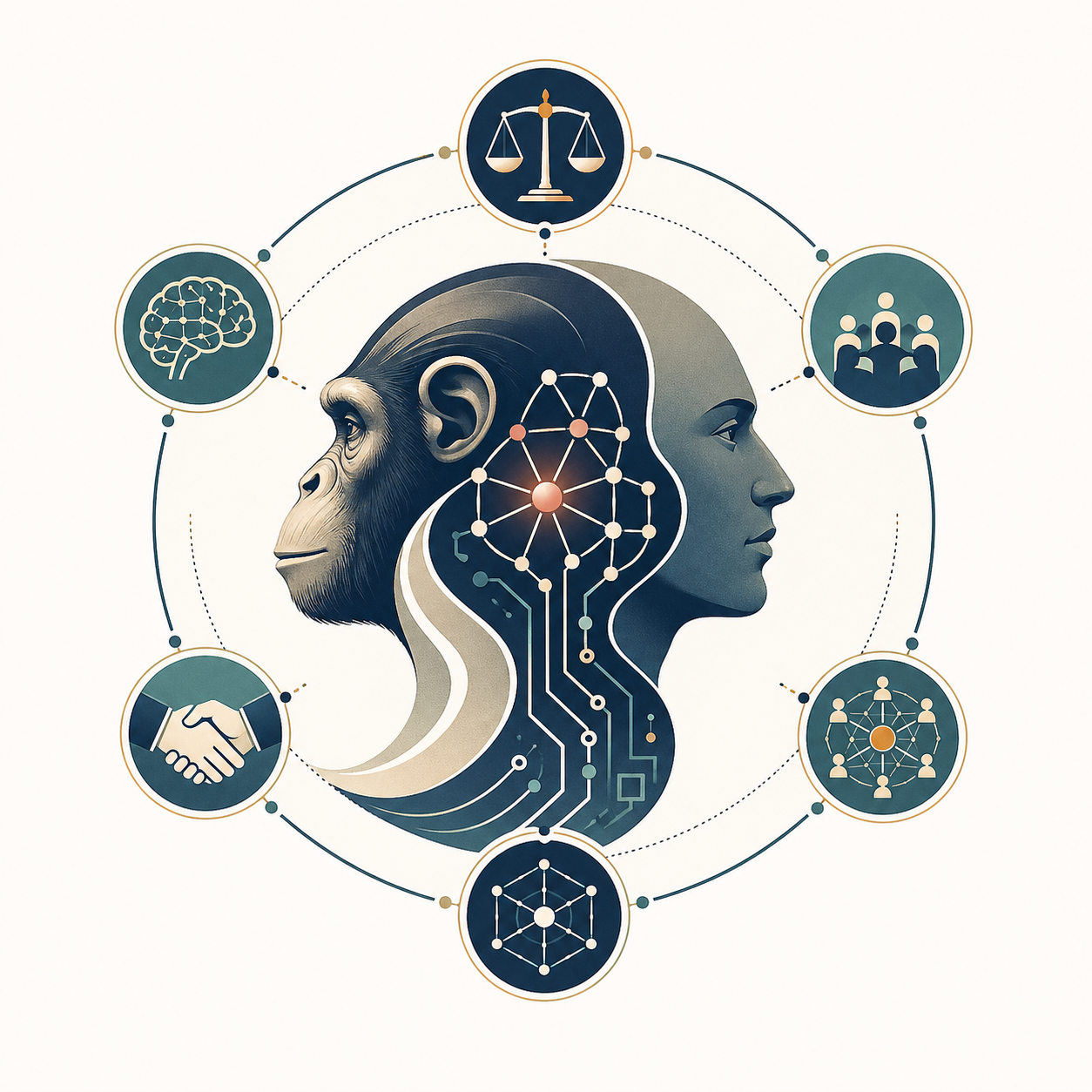
Yet decades of research in primatology and comparative cognition show that many capacities studied in the human sciences have functionally comparable counterparts in other primates. These comparisons reveal the shared biological and cognitive foundations of human capacities and provide an empirical basis for evaluating whether theories characterize them correctly. Here, we propose a cross-species framework that aligns major domains of human cognition with functionally comparable capacities observed across species. We also introduce a cross-species workflow for producing robust results by grounding human research in comparative evidence.
Together, the framework and workflow ground the human sciences in observable capacities and comparative evidence, moving beyond loosely defined constructs and narrative interpretations toward a robust, mechanism-based science.
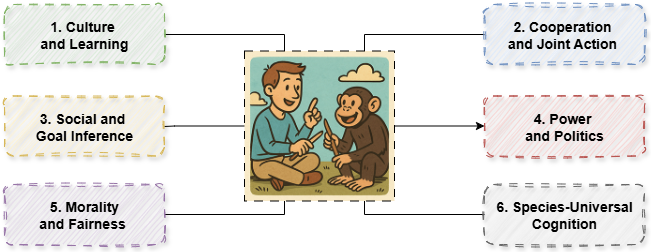
Much of psychology and the social sciences explains human behavior through vague abstractions—terms like “morality,” “cooperation,” or “culture”—as if they were symbolic constructs detached from cognition. This framing obscures the functional mechanisms that actually generate these behaviors.
In reality, many of these so-called uniquely human traits are observable in other species, not metaphorically, but as concrete behavioral patterns. By organizing chimpanzee behavior into cognitive domains, we show that these capacities are not cultural inventions, but structured elaborations of general-purpose mechanisms already present across species.
Reframing human cognition as a biological continuum matters because it reconnects social theory with something observable and testable. It allows us to build models of human behavior that are functionally explicit, biologically anchored, and no longer dependent on idealized social narratives.
By grounding high-level social and cognitive phenomena in explicit behavioral mechanisms, this framework replaces abstract narratives with structures that can be modeled, compared, and tested. Instead of treating human cognition as a uniquely symbolic or mental construct, it reframes it as a biological system continuous with other species.
This perspective dissolves the traditional boundaries separating psychology, anthropology, political science, and economics. What were once treated as isolated domains—“mind,” “culture,” “institutions,” and “society”—become coherent manifestations of a shared biological and cognitive substrate, expressed differently as these capacities extend, combine, or elaborate across species and contexts.
By shifting from metaphors to mechanisms, this approach opens a path toward a unified science of cognition and social behavior—one that explains complex human systems not through higher abstractions, but by showing how they emerge from shared, biologically grounded behavioral capacities. This mechanistic reframing provides a foundation for simulation, prediction, and cross-species comparison in ways previously inaccessible.
@misc{diau_2025_16731913,
  author       = {Diau, Egil},
  title        = {Rethinking Human Cognition: A Comparative
                   Framework Bridging Biological Roots and Social
                   Complexity
                  },
  month        = aug,
  year         = 2025,
  publisher    = {Zenodo},
  doi          = {10.5281/zenodo.16731913},
  url          = {https://doi.org/10.5281/zenodo.16731913},
}